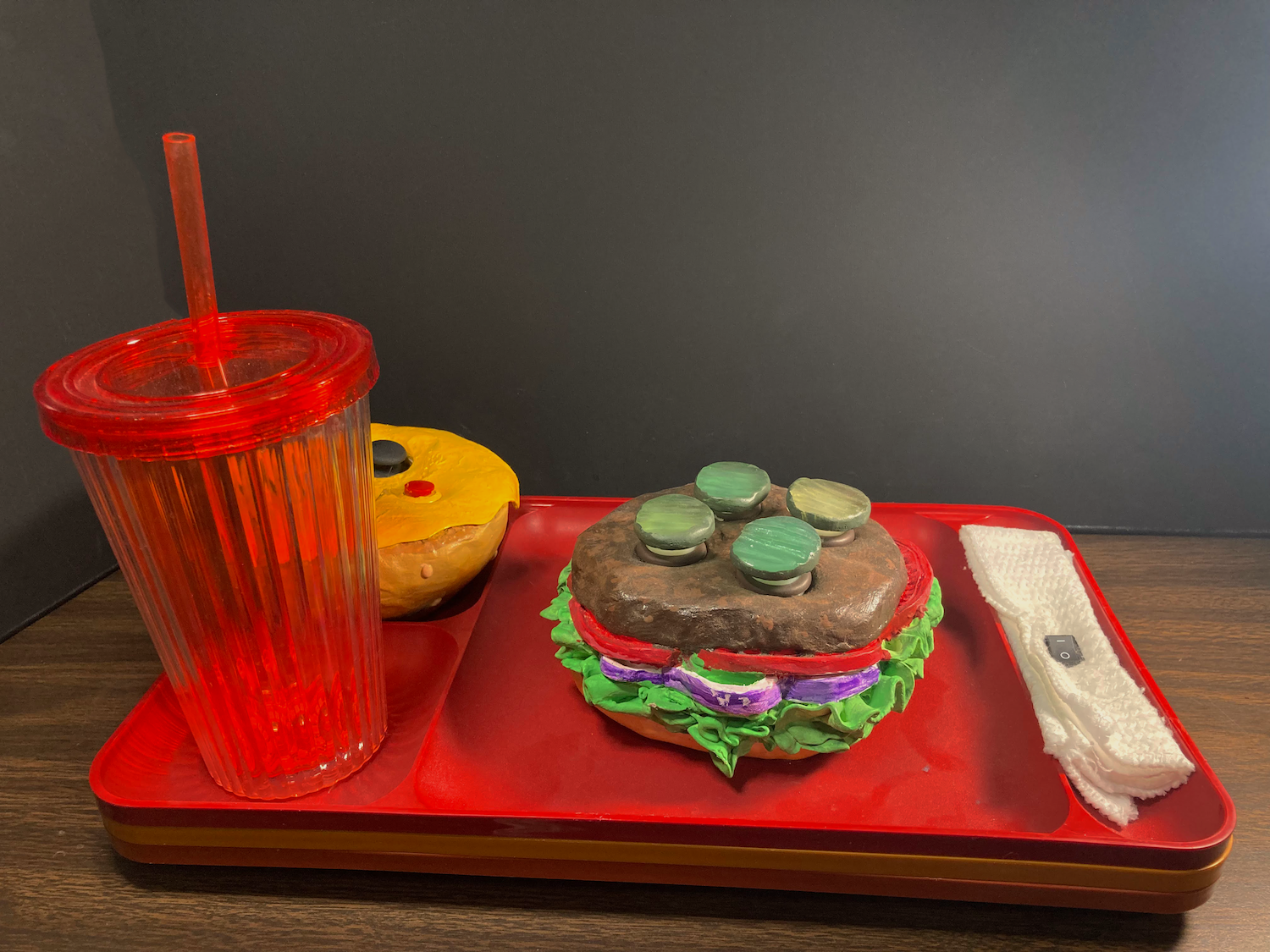
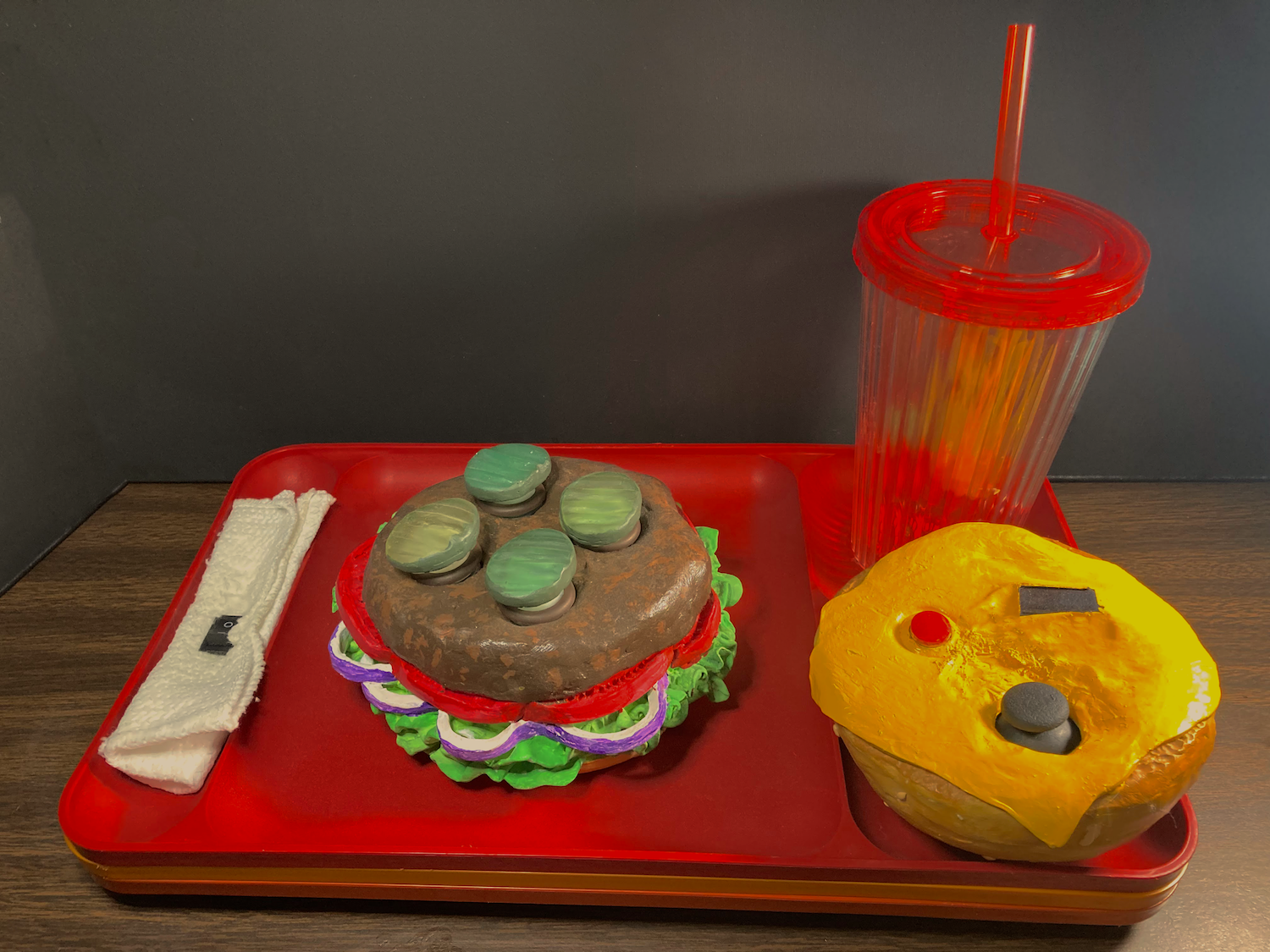
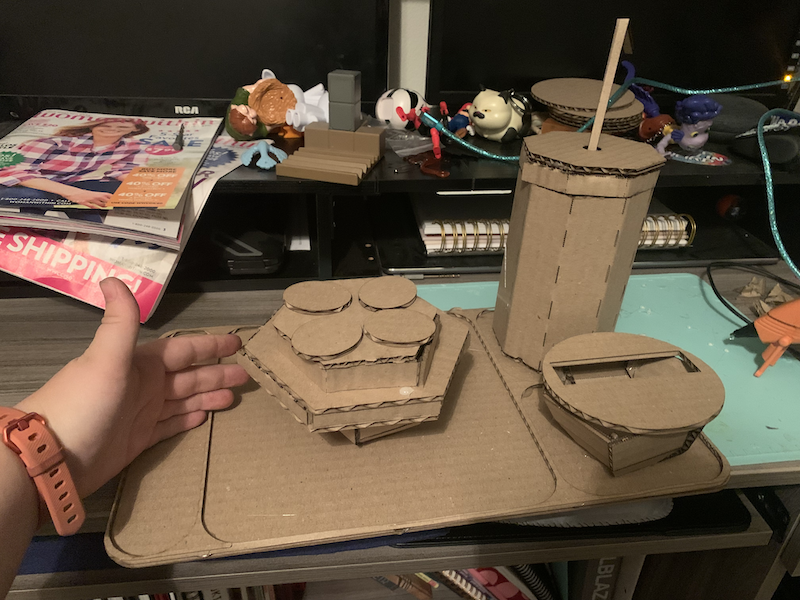
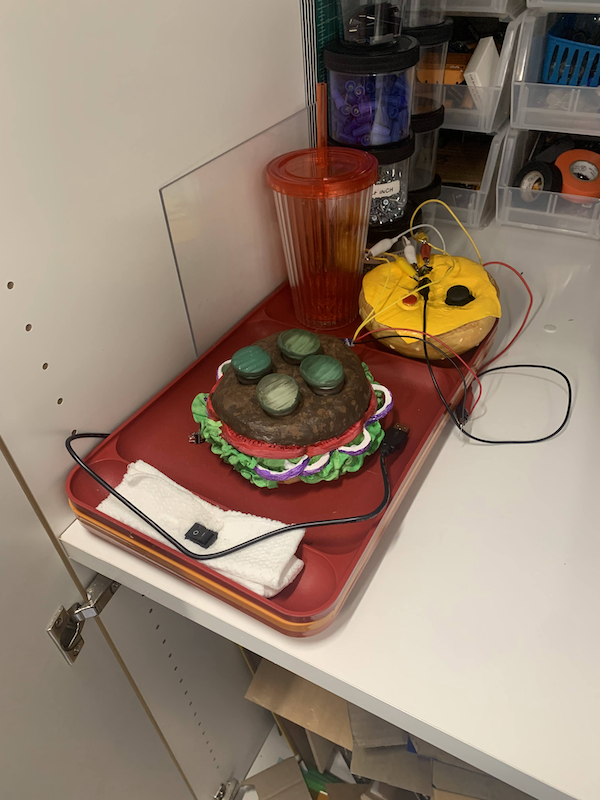
This build was a project completed as part of the DES 4200 Course at Utah Tech University. In this project, which began as a midterm but soon grew into our final projects as we progressed, we were challenged to create a spinoff of the classic "Simon Says" memory game using new mechanics and form. After brainstorming, I pitched the idea to create a game that would be in the form of a fast-food burger tray, that could be placed on a table and played with friends. In addition to this form, I decided to add the functionality of high scores, allowing players to view a high-score list, as well as add their own score and custom name to it.

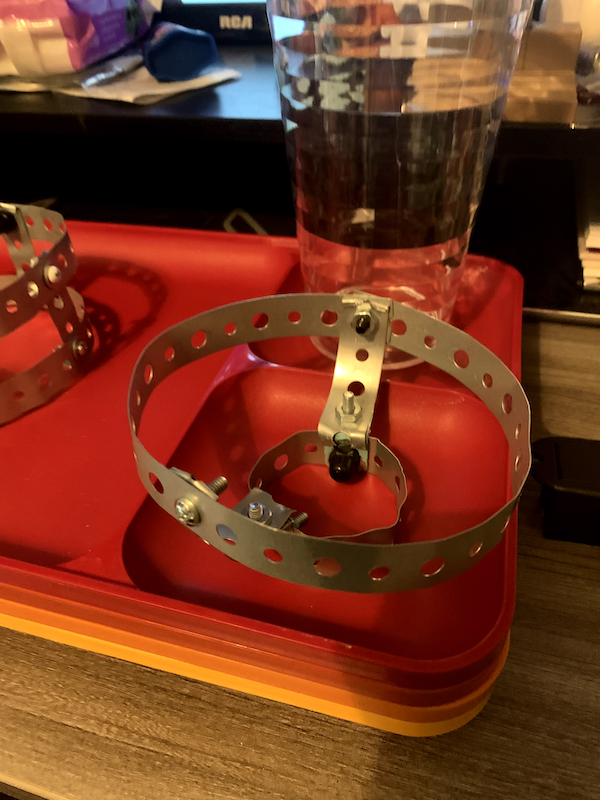
The most difficult part of the game was its construction. I initially wanted to create the burger using 3D printing, but at the time, I was relatively new to 3D modeling, and could not achieve the level of detail that my project required. Instead, I decided to go for something just as durable, albeit a bit more time consuming: clay. I used a metal armature created using wire and reinforced with metal brackets and screws, which I then wrapped in clay and sculpted to the desired shape. Along the way, I tested each of the parts that I needed to include in the build, ensuring that they would fit, albeit snuggly, in their shell. Once the clay was fired, I painted the clay with glossy acrylics, and assembled the electronics securely inside it.
Next was the rest of the tray, the drink light, and the power switch. I ended up using a tray that I thrifted and then drilled and dremeled holes for wiring to go through. I hid the power switch in a cloth napkin to blend it into the design, trimming and proofing it as necessary. Last, for the drink light, I originally had the idea to fill a drink with clear resin so that it would look full, and then shine the light through it to make a bulb.

However, as I learned, putting a large quantity of resin in a container all at once can cause a bad reaction in the resin and cause it to cure all at once. The resin, and the plastic cup it was in, was shattered. So instead, I used a tumblr that had two walls of plastic to make it look as if it was full, and it ended up working perfectly. However, I still used resin for the buttons of the game. I ended up taking real pickles and molding them using a rubber mold compound. Then, I filled the finished molds with clear green resin, creating pickle buttons that could light up in time with the patterns of the game. I painted them for some finishing touches, and then they were ready to attach.
The code for the game was created using an Arduino nano, a small pixel screen, neopixel rings, arcade buttons, and a joystick controller. This had been my first semester programming with an Arduino, so it was quite the learning curve. However, with my previous experience in code, after learning the physical hookups, the actual game program was a breeze. In the end, users start the game in a wait-screen sort of state, with the lights changing in a rainbow pattern, and previous high scores being displayed on the screen. Once a player presses a pickle button, the game of memory begins. When a player returns the correct pattern, the light in the drink flashes green, and the pattern continues. If a player presses the wrong pattern, the light turns red, and an error buzzer sound is played. Then, the player can enter a custom name using the joystick to cycle through letters, and presses the button to enter the name. The player's name is then saved in their respective spot on the leaderboard, and they can begin the game again if they so desire.